
 nemoihk@gmail.com

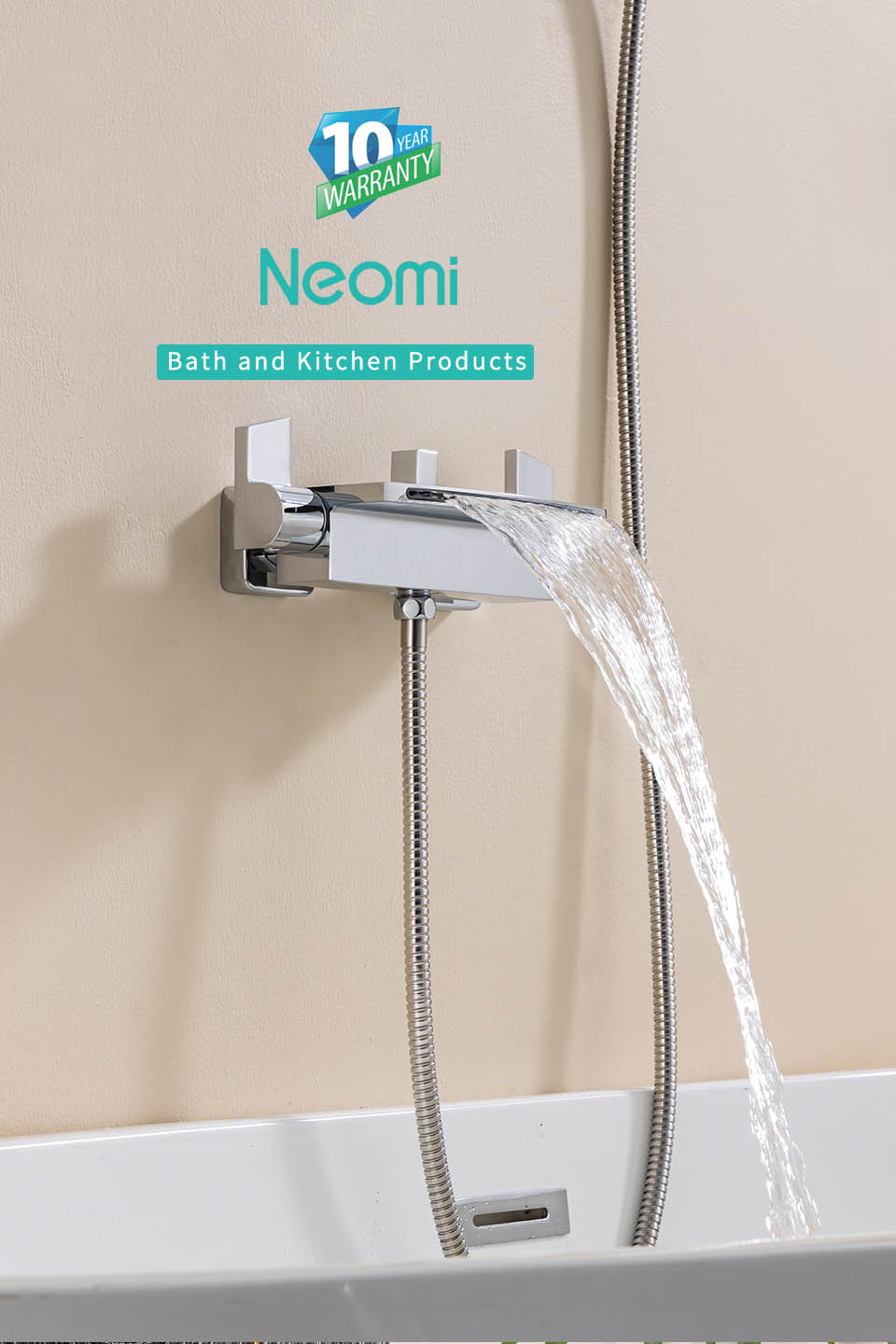
Selection methods for under-sink faucets
2025-07-04 09:34:47
Click:
Selection methods for under-sink faucets
Confirm the matching of the installation space and dimensions
Under-sink basins are usually embedded under the countertop. It is necessary to measure the size of the opening in the basin (diameter or length and width) and the thickness of the countertop to ensure that the faucet base can fully cover the opening and does not protrude from the edge of the countertop. For instance, if the diameter of the opening is 35mm, a model with a base diameter of ≥40mm should be selected to cover the connection. In addition, check if the height of the faucet is sufficient (it is recommended that the water outlet be at least 20cm from the bottom of the basin) to avoid hitting your head when washing your face or doing the laundry.
Select the appropriate water outlet method and Angle
The design of the water outlet of the under-sink faucet should match the usage habits:
High arc-shaped water outlet: Suitable for double channels or deep basins, water is less likely to splash out, but it is necessary to confirm whether the arc matches the depth of the basin body.
Pull-out faucet: It is convenient to rinse the edge of the basin or hair, but the length of the pull-out tube (usually ≥1m) and the smoothness of the rebound need to be checked.
360-degree rotation: Suitable for single-slot washbasins, the water outlet direction can be freely adjusted, but attention should be paid to the sealing at the rotating part to avoid water leakage.
Check the material and corrosion resistance
The material of the main body of a faucet directly affects its lifespan
Copper material: It has excellent antibacterial properties, but the style with lead content meeting the national standard (≤0.25%) should be selected to avoid water pollution.
Stainless steel: It has strong corrosion resistance and is suitable for bathroom environments with high humidity. However, it is necessary to confirm whether the surface treatment process (such as brushing or sandblasting) is anti-fingerprint.
Valve core material: Ceramic valve core is preferred, which is wear-resistant and has good sealing performance, with an on-off cycle of over 500,000 times.
Test the operation feel and sensitivity
Single-handle faucets need to repeatedly test the handle:
The rotational resistance should be moderate. If it is too tight, the valve core may be damaged; if it is too loose, the water temperature may get out of control.
The cold and hot water mixing area should have a smooth transition to avoid sudden changes in temperature during adjustment.
For models with sensing functions, the sensing sensitivity needs to be tested (if the hand swing distance is ≤10cm, it can be triggered).
Evaluate water-saving and splash-proof designs
Aerator: Honeycomb or mesh filter screens are preferred, which can mix water flow with air, reduce splashing and save water by more than 30%.
Water-saving valve core: Some products are equipped with built-in flow-limiting devices, which can control the flow rate below 6L/min (about 9-12L/min for ordinary faucets).
Splash resistance test: If conditions permit, simulate turning on the water flow and observe whether the water splashes are concentrated in the basin.
Check the accessories and installation convenience
Confirm whether all accessories are complete: hose (length ≥50cm), fixing nut, sealing gasket and instruction manual.
The installation method should match the countertop
Countertop installation: Suitable for countertops with already drilled holes. Just tighten the nuts and fix it directly.
Embedded installation: It requires pre-buried water supply pipes and is suitable for new home decoration or countertop renovation.
Check whether the water inlet pipe interface matches the household water pipe (such as G1/2 or G3/4 thread).
Pay attention to maintenance and after-sales support
Check if the faucet is detachable for cleaning: Components such as the aerator and pull-out should be removable by hand to prevent scale accumulation.
Inquire about the warranty period (usually 3 to 5 years) and scope (such as whether free repair is provided for damaged valve cores or surface peeling).
Avoid choosing styles with overly complex structures to prevent high maintenance costs in the future.
Choose by combining style and practicality
For the modern minimalist style, you can choose a straight-line or unadorned inlaid faucet to avoid excessive decoration and dust accumulation.
For the retro style, you can choose either a handle or a carved design, but be sure to check if the corners are rounded to prevent bumps.
If the washbasin is small, avoid choosing an overly tall faucet to prevent it from affecting the visual balance.
Through the above methods, you can comprehensively consider installation, functionality, durability and aesthetics to choose a faucet that perfectly matches the under-sink.
Author:
TUNG TAT BUILDING MATERIALS LIMITED
0
Related news
-

花灑式出水水龍頭選購技巧
花灑式出水水龍頭選購技巧
-
不銹鋼水龍頭選購指南
鍍鉻水龍頭選購方法
-
Selection methods for under-sink faucets
Selection methods for under-sink faucetsConfirm the matching of the installation
-
Methods for choosing bathroom faucets
Methods for choosing bathroom faucets
-
Tips for choosing faucet pipe diameters
Tips for choosing faucet pipe diameters
-
Selection of faucets suitable for 4-inch water pipes
Selection methods for faucets compatible with 4-inch pipes


