
 nemoihk@gmail.com

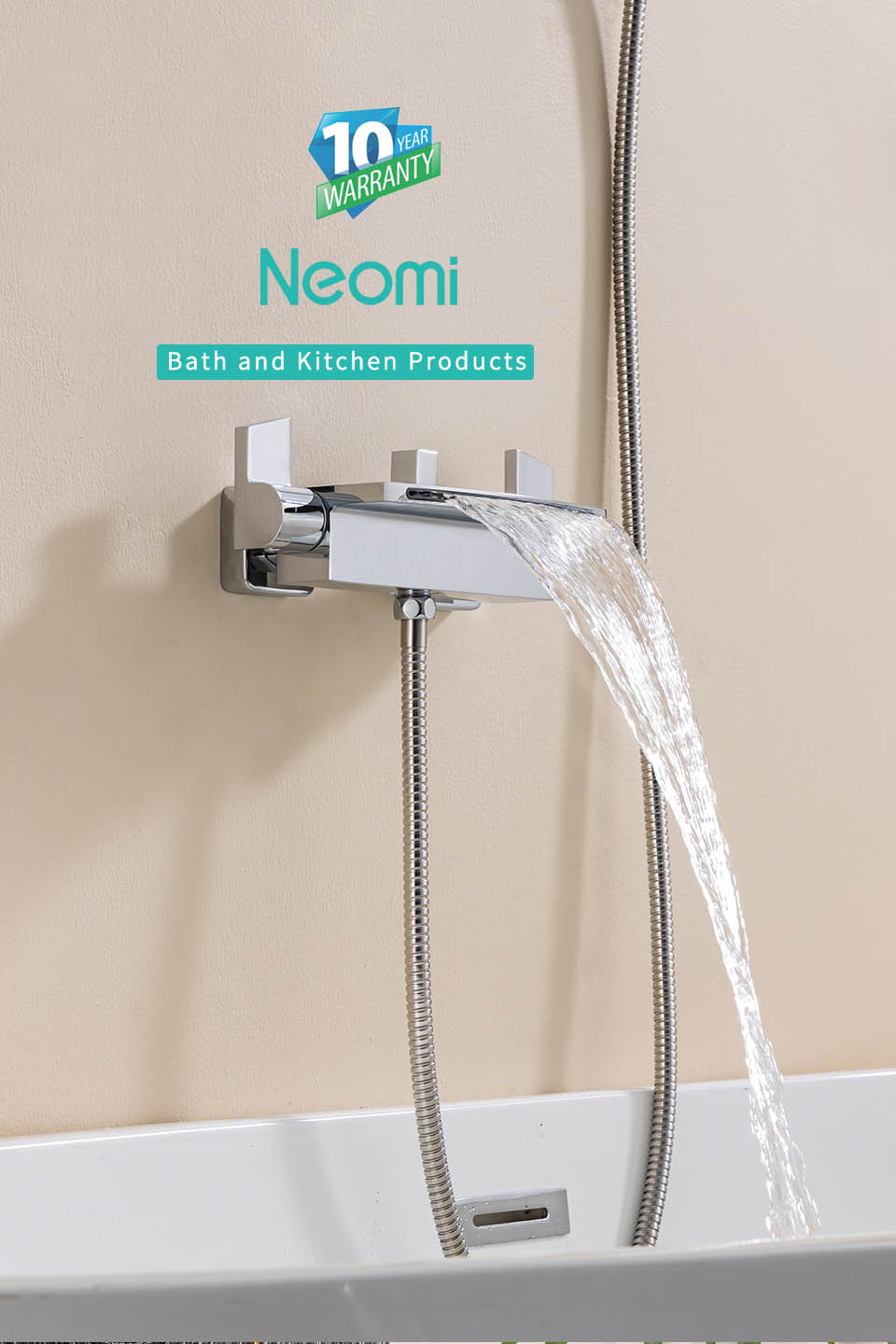
Selection of faucets suitable for 4-inch water pipes
2025-07-03 09:13:42
Click:
Selection methods for faucets compatible with 4-inch pipes
Confirm the specifications of the water pipe interface
The inner diameter of a 4-inch faucet is approximately 12.7 millimeters (1/2 inch). It is necessary to purchase a faucet that is marked as compatible with the '4-inch' or '1/2 inch' interface. Some products may be marked as 'G1/2' or 'DN15', and they need to be consistent with the water pipe interface standards. If the water pipe is an external thread (with protruding threads), the faucet should be designed as an internal thread (with recessed threads), and vice versa.
Check the thread type and matching degree
The water pipe threads are divided into British standard (BSP) and American standard (NPT). It is necessary to confirm that the type of faucet thread is consistent with that of the water pipe. The pitch of British standard threads is relatively sparse, while that of American standard threads is denser. Mixing them may lead to water leakage. If you are unable to confirm, you can bring a water pipe sample to the store for comparison, or purchase a model with a universal adapter ring.
Measure the depth and length of the interface
The depth of the thread at the faucet's water inlet should match the exposed length of the water pipe. If the exposed water pipe is too short, a style with shallower threads should be selected or an extension joint should be installed. If the exposed part is too long, you can choose a style with a deeper thread to avoid the thread not fully engaging after connection. When installing, make sure the thread is screwed in at least 3 to 4 turns to ensure sealing.
Confirm the sealing method and accessories
It is recommended to choose faucets with a dual-sealing design (such as rubber gaskets + PTFE tape grooves) to reduce the risk of leakage. If the faucet only comes with a single sealing method, you need to purchase the appropriate raw material tape or sealant by yourself. Before installation, impurities in the threads need to be cleaned to avoid damaging the sealing parts.
Check the material and flexibility of the water inlet pipe
Some faucets come with an inlet pipe. It is necessary to confirm that the material is stainless steel braided pipe or EPDM rubber pipe, which is pressure-resistant and anti-aging. Measure whether the length of the inlet pipe is sufficient to connect to the Angle valve. If it is too short, reserve space for installing an extension pipe. The outer diameter of the water inlet pipe should match the 4-inch interface to avoid being too thick or too thin.
Consider the installation method of the faucet
If it is installed on a countertop (such as a kitchen sink), it is necessary to confirm that the faucet base can fully cover the sink opening and that the water inlet pipe can smoothly pass through from below. If it is installed under the countertop (such as some bathroom washbasins), the thickness of the countertop needs to be measured to ensure that the installation nuts can be tightened. For some faucets, the inlet pipe needs to be disassembled before installation. It is necessary to confirm the feasibility of the operation.
Test the stability of the connection
After installation, it is necessary to check whether the connection between the faucet and the water pipe is stable and whether there is no shaking when gently shaking the faucet. After turning on the water source, observe whether there is water seepage at the interface. If any dripping or leakage is found, immediately close the main valve and check the sealing parts. Some faucets need to have the air inside the pipe drained when used for the first time to prevent intermittent water flow.
Confirm the compatibility of additional functions and interfaces
If the faucet is equipped with additional functions such as a filter, spray gun or temperature display, it is necessary to confirm that its water inlet is still a 4-point standard interface to avoid changing the pipe diameter due to additional devices. For instance, when installing an external filter, it is necessary to confirm that both the inlet and outlet ports are 4 points, and check whether the installation of the filter affects the operation of the faucet.
Check the influence of the main material of the faucet on the interface
Copper or steel faucet interfaces have relatively high strength and are suitable for long-term use. Plastic interfaces may become brittle due to aging and need to be inspected regularly. If the main body of the faucet is too heavy, it is necessary to confirm that the water inlet pipe and the interface can bear the weight to avoid the threads loosening after long-term use.
Reserve space for maintenance and replacement
After installation, it is necessary to ensure that there is sufficient operating space around the faucet to facilitate the disassembly of the water inlet pipe or the replacement of the seal in the future. If the space is limited, you can choose a model with a flexible water inlet pipe design or reserve space for installing an adapter.
Through the above details, you can purchase a faucet that perfectly matches the 4-inch water pipe, avoiding leakage or installation failure caused by incompatible interfaces. It is recommended that professionals operate during installation to ensure sealing and safety.
Author:
TUNG TAT BUILDING MATERIALS LIMITED
0
Related news
-

花灑式出水水龍頭選購技巧
花灑式出水水龍頭選購技巧
-
不銹鋼水龍頭選購指南
鍍鉻水龍頭選購方法
-
Selection methods for under-sink faucets
Selection methods for under-sink faucetsConfirm the matching of the installation
-
Methods for choosing bathroom faucets
Methods for choosing bathroom faucets
-
Tips for choosing faucet pipe diameters
Tips for choosing faucet pipe diameters
-
Selection of faucets suitable for 4-inch water pipes
Selection methods for faucets compatible with 4-inch pipes


