
 nemoihk@gmail.com

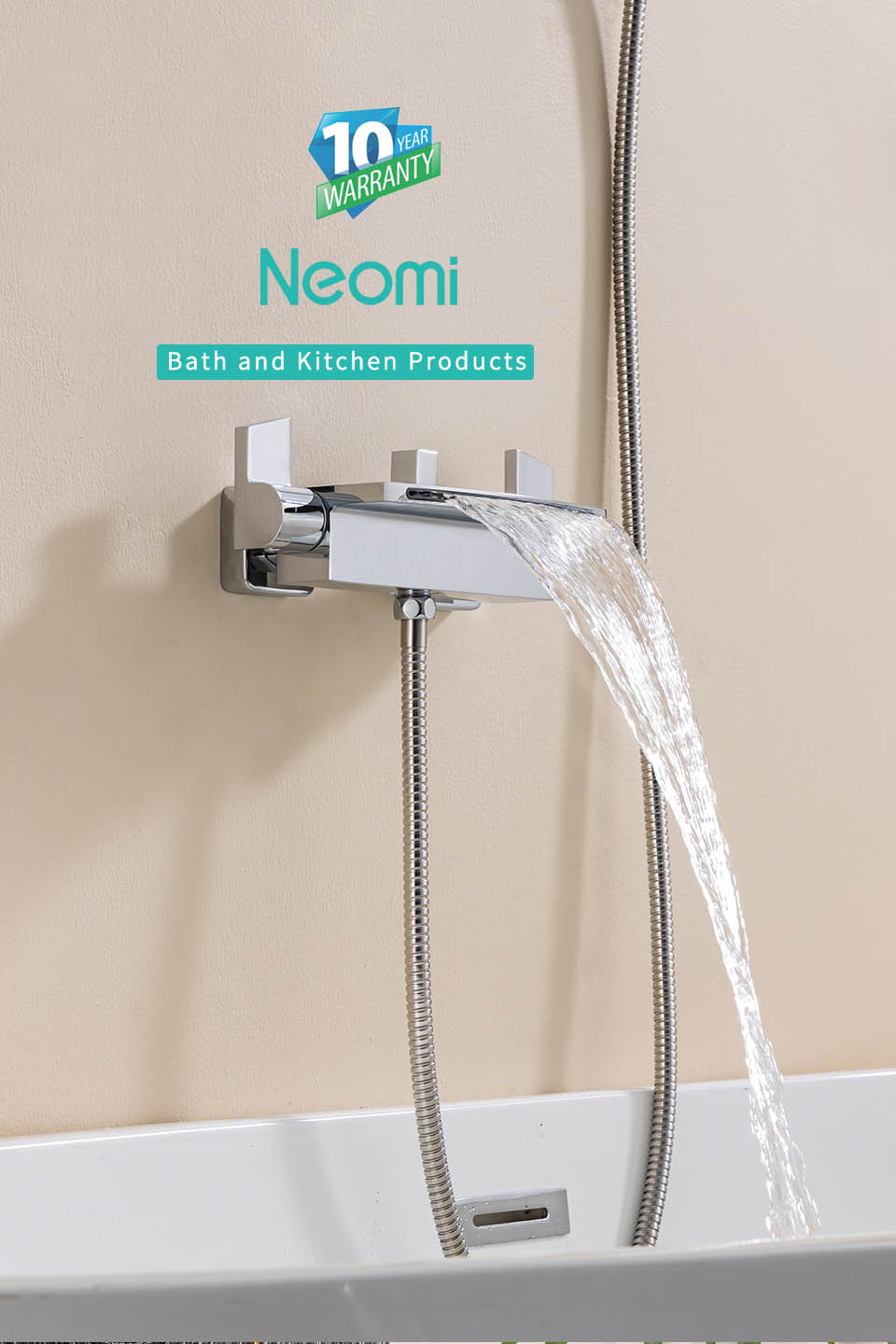
Tips for choosing faucet pipe diameters
2025-07-03 09:15:06
Click:
Tips for choosing faucet pipe diameters
Specify the standard pipe diameter for the water pipe system
Generally, household water pipes are divided into two mainstream specifications: 4 inches (1/2 inch, with an inner diameter of approximately 12.7 millimeters) and 6 inches (3/4 inch, with an inner diameter of approximately 19 millimeters). It is necessary to confirm the current pipe diameter at home first. If it is an old residence, there may be non-standard pipe diameters (such as 3 inches or 1 inch). You need to measure the inner or outer diameter of the water pipe with a caliper and then purchase a faucet of the corresponding pipe diameter to avoid leakage or abnormal water pressure due to pipe diameter mismatch.
Distinguish the pipe diameter requirements for the inlet and outlet
The diameter of the inlet pipe needs to match that of the water pipe (for example, a 4-inch water pipe with a 4-inch inlet pipe), while the diameter of the outlet pipe affects the water flow intensity and water-saving effect. Generally, the diameter of the outlet pipe is slightly smaller than that of the inlet (such as 4 fen for the inlet and 3 fen for the outlet). The Venturi effect can be utilized to increase the water flow rate. However, a pipe diameter that is too small may result in insufficient water pressure, and the selection should be based on the actual water pressure.
Check the design of the faucet connector
Prefer faucets with adjustable connectors, such as those with adapter rings or universal connectors at the water inlet, which can be compatible with 4-inch and 6-inch pipes, reducing the trouble of pipe modification due to pipe diameter mismatch. If the joint is of a fixed pipe diameter, it is necessary to confirm that its thread specification (such as G1/2 or NPT1/2) is consistent with that of the water pipe, and check whether the thread depth is sufficient to engage.
Consider the balance between water pressure and pipe diameter
For high-rise residential buildings or areas with insufficient water pressure, it is advisable to choose faucets with the same inlet and outlet pipe diameters (such as both 4-inch pipe diameters) to prevent further pressure reduction after the water flows through the reduced diameter. If the water pressure is sufficient, a design with a large inlet and a small outlet (such as a 6-minute inlet and a 4-minute outlet) can be selected to increase the outlet speed. However, it is necessary to pay attention to water-saving certification to avoid waste.
Confirm the requirements for pipe diameter for the additional function
If the faucet is equipped with additional devices such as a filter, instant heating function or a spray gun, it is necessary to confirm that the diameters of its inlet and outlet pipes match those of the main faucet. For instance, for an external filter, both the inlet and outlet ports should be 4-inch, and there should be no reduction in the diameter of the intermediate pipeline to avoid affecting the filtration efficiency or water flow rate.
Measure the installation space and limit the selection of pipe diameter
If the faucet needs to be installed in a narrow space (such as inside a cabinet or in a wall groove), it is necessary to confirm that the bending range of the inlet pipe is compatible with the pipe diameter. Pipes with overly thick diameters may not be able to be bent due to insufficient space, causing installation difficulties. At this point, soft stainless steel braided tubes or flexible EPDM rubber tubes can be chosen to reduce space occupation.
Check the compatibility between the pipe diameter and the material of the faucet
The water inlet of the copper faucet has high strength and is suitable for long-term use with large pipe diameters (such as 6 inches). Plastic or zinc alloy joints may deform under high pressure. It is recommended to use them with pipe diameters of 4 minutes or less. If a high water pressure environment is required, it is necessary to confirm that the joint has a reinforced design or metal threads to prevent leakage.
Reserve space for upgrading the pipe diameter
If it is possible to replace water pipes or add water-using equipment (such as a whole-house water purification system) in the future, it is recommended to purchase a faucet with a larger inlet pipe diameter (such as 6-inch) so that it can be directly connected to the new pipeline without any additional modification. The water outlet can be selected according to the current demand, and the water-saving aerator will be replaced later to adjust the flow rate.
Confirm the compatibility of the pipe diameter with the type of faucet
For pull-out faucets that need to move around, the inlet pipe diameter should not be too thick (it is recommended to be 4 inches or less) to avoid affecting flexibility. For fixed kitchen faucets that require a high flow rate, a 6-inch pipe diameter for the inlet and outlet water can be selected. For the shower faucet, it is necessary to ensure that the diameters of the cold and hot water inlet pipes are the same to avoid unstable temperature control.
Test the connection sealing performance and the matching degree with the pipe diameter
After installation, it is necessary to check that there is no leakage at all joints, especially at the places where the pipe diameter changes (such as from 4 minutes of water inflow to 3 minutes of water outflow). The threads can be pre-treated with raw material tape or sealing gaskets first, and then the joint can be gradually tightened. After turning on the water source, observe whether the water flow is stable. If abnormal sounds or vibrations are detected, it might be due to a mismatch in pipe diameter causing air blockage, and readjustance is required.
By following the above tips, you can select a faucet with a suitable pipe diameter and stable performance based on your home's water pipe system, water pressure conditions and usage needs, avoiding problems such as leakage, insufficient water pressure or difficult maintenance caused by pipe diameter mismatch.
Author:
TUNG TAT BUILDING MATERIALS LIMITED
0
Related news
-

花灑式出水水龍頭選購技巧
花灑式出水水龍頭選購技巧
-
不銹鋼水龍頭選購指南
鍍鉻水龍頭選購方法
-
Selection methods for under-sink faucets
Selection methods for under-sink faucetsConfirm the matching of the installation
-
Methods for choosing bathroom faucets
Methods for choosing bathroom faucets
-
Tips for choosing faucet pipe diameters
Tips for choosing faucet pipe diameters
-
Selection of faucets suitable for 4-inch water pipes
Selection methods for faucets compatible with 4-inch pipes


